Our products are not OEM, they are only compatible parts


Views: 0 Author: Site Editor Publish Time: 2026-09-22 Origin: Site
Continuous rotary PET blow moulding operations rely heavily on precise mechanical timing and vacuum integrity. Minor degradation in wear parts compounds rapidly at high output speeds, causing cascading inefficiencies. You might assume your equipment runs perfectly until a sudden jam halts the line.
Unplanned downtime and reduced Overall Equipment Effectiveness (OEE) are rarely caused by catastrophic machine failure. Instead, they usually result from the gradual wear of specialized consumables. Ignoring these small degradations leads directly to increased scrap rates and frustrating micro-stoppages. We often overlook the silent deterioration of internal contact surfaces until they severely disrupt production.
We aim to provide a technical evaluation framework for plant managers and maintenance engineers. You will learn to properly assess and source optimal wear parts. We focus specifically on suction blocks, bearings, and impact foams. Following these guidelines helps you balance cost efficiency with long-term mechanical reliability.
Suction Block Precision: Even micro-abrasions on vacuum surfaces can lead to preform dropping; dimensional accuracy in compatible parts is non-negotiable.
Vibration Management: Rubber-lined bearings are critical for extending the lifespan of adjacent rotary components by isolating harmonic vibrations.
Impact Mitigation: Degradation of shock-absorbing foam directly increases mechanical fatigue on mold carriers and transfer arms.
Sourcing Protocol: Evaluating Sacmi Spare Part Compatible Parts requires strict verification of material composition (e.g., Shore hardness, thermal resistance) against OEM baselines to mitigate production risks.
Rotary machines operate under constant kinetic and thermal stress. They push consumables to their absolute physical limits. When equipment produces tens of thousands of bottles per hour, internal mechanisms endure extreme cyclical loading. This relentless motion accelerates the deterioration of surfaces handling pneumatic transfers and mechanical alignments. You cannot escape the laws of physics governing friction and material fatigue. High-speed manufacturing environments magnify minor imperfections, turning small deviations into significant mechanical bottlenecks over time.
The true cost of a degraded wear part goes far beyond the initial replacement price. You must account for the resulting scrap rates, unpredictable micro-stoppages, and potential damage to primary machine components. A failing contact pad might seem insignificant, but it can misalign a transfer starwheel. This misalignment forces metal components to grind against each other. Eventually, these secondary damages create massive maintenance headaches. Plant managers must reframe how they view these small components. They are vital protective barriers for your larger capital investments.
We evaluate success criteria for consumables through three distinct lenses. First, predictable wear cycles allow maintenance teams to plan interventions accurately. Second, structural stability under continuous load ensures parts do not deform mid-production. Third, strict adherence to geometric tolerances guarantees seamless integration into complex machinery.
Predictable Lifecycle: Parts must degrade linearly, allowing for scheduled replacements.
Structural Integrity: Materials must resist thermal expansion and kinetic compression.
Geometric Accuracy: Component dimensions must perfectly match existing machine manifold layouts.
Suction blocks play a crucial functional role in your rotary machine. They secure preforms and bottles during high-speed transfer phases. As the starwheel rotates, these blocks create a tight vacuum seal. This seal holds the lightweight plastic securely against centrifugal forces. The precision of this transfer dictates the overall flow of your production line. If the vacuum hold fluctuates even slightly, the preform shifts. Shifted preforms inevitably collide with mold entry points, halting the entire blowing process.
You can identify failing blocks through several clear failure symptoms. Watch out for micro-leaks, inconsistent vacuum pressure, and dropped preforms. Dropped preforms routinely lead to severe machine jams. These jams require manual intervention, halting your output and wasting valuable energy. Operators often hear a distinct hissing sound near the transfer station when seals begin to fail. Ignoring these acoustic warnings usually results in a sudden spike in scrap rates.
When assessing these components, you must focus on specific evaluation dimensions. Material composition matters immensely. The wear resistance of the contact surface prevents premature grooving. Continuous friction from PET plastic slowly etches channels into subpar materials. Furthermore, dimensional tolerance is critical. You must verify how exactly a Sacmi suction block compatible part matches the specific machine manifold. Perfect alignment ensures zero pressure loss.
Sourcing substandard blocks introduces significant implementation risks. Poorly fitting blocks cause vacuum pump overexertion. Your pumps will run continuously to compensate for the pressure loss, leading to increased energy consumption. Over time, this overexertion burns out expensive vacuum pump motors. We highly recommend conducting localized vacuum decay tests before installing a new batch of compatible blocks across your entire machine line.
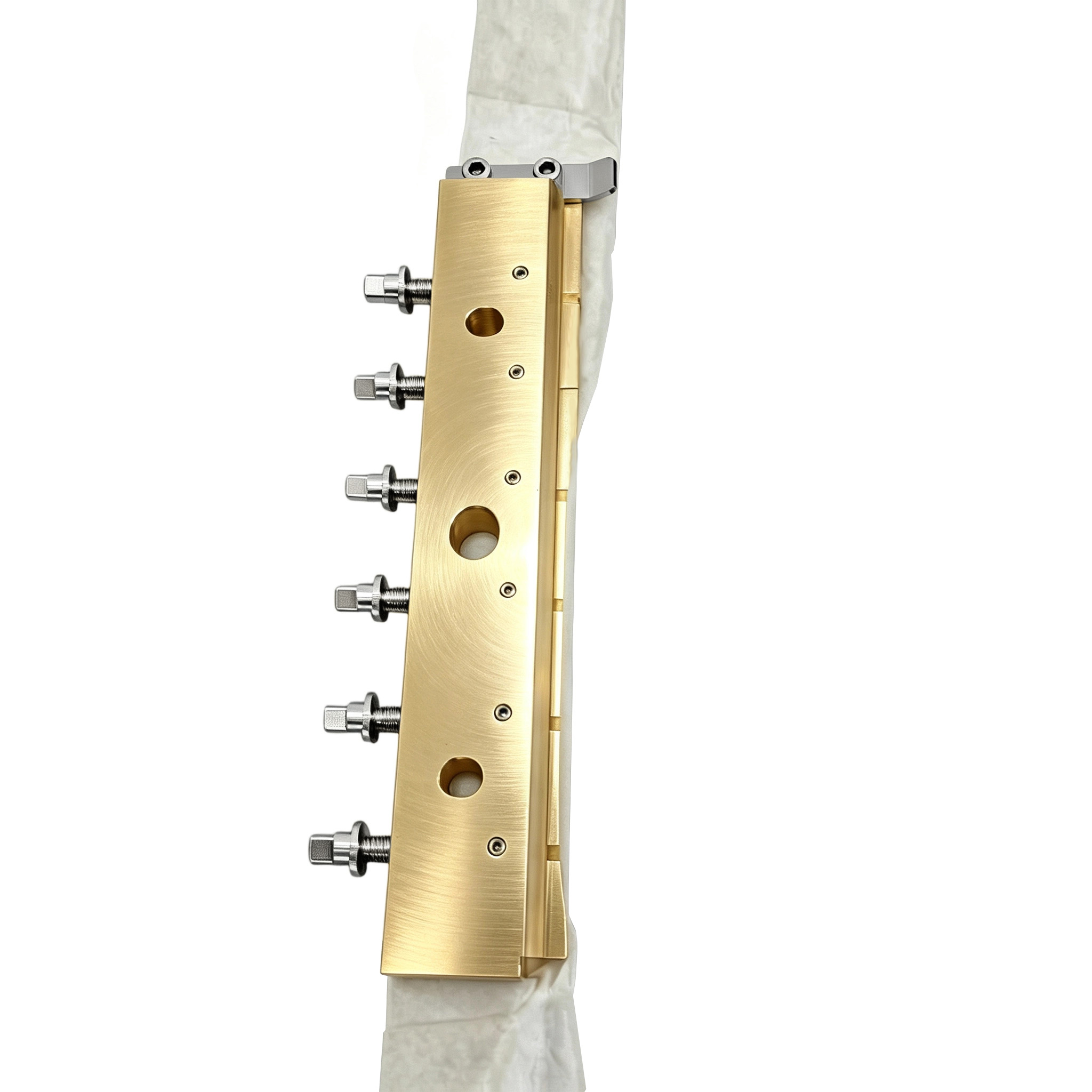
Rubber-lined bearings fulfill an essential functional role by supporting rotary axes while dampening high-frequency vibrations. The stretch-blowing process generates massive internal forces. High-pressure air enters the molds instantly, creating aggressive harmonic waves throughout the machine chassis. Rubber linings absorb these shockwaves before they travel into sensitive servomotors and delicate structural joints. Without this isolation layer, your machine would literally shake itself out of alignment.
Failure symptoms for these bearings become obvious quickly. You will notice excessive machine noise and accelerated wear on adjacent metal components. Furthermore, failing bearings cause inconsistent mold alignment. When the rubber lining degrades, the bearing housing shifts slightly. This shift misaligns the mold halves during closing, creating visible seam lines on your finished bottles.
Evaluation dimensions require careful scrutiny of the manufacturing process. Bonding integrity is paramount. You must assess the risk of delamination between the rubber lining and the bearing housing under thermal stress. Heat generated by constant friction softens cheap adhesives. Additionally, friction and load distribution dictate performance. A high-quality Sacmi rubber‑lined bearing maintains exact concentricity under severe lateral loads.
Table: Wear Part Failure Symptoms & Operational Impact
| Component | Primary Failure Symptom | Direct Operational Impact | Secondary Risk |
|---|---|---|---|
| Suction Block | Micro-leaks / grooved surface | Dropped preforms, line jams | Vacuum pump motor burnout |
| Rubber-Lined Bearing | Delamination, high noise | Inconsistent mold closing | Accelerated metal fatigue |
| Shock-Absorbing Foam | Compression set, flaking | Harsh mechanical impacts | Chassis cracking, sensor failure |
You must apply a strict decision lens when purchasing these bearings. Evaluate them based on long-term vibration analysis data rather than the initial purchase price. A cheap bearing might save money today, but it will transmit damaging vibrations tomorrow. We advise maintenance teams to use handheld vibration meters. Monitor the baseline frequencies of newly installed bearings to establish an accurate degradation curve.
Your machine generates intense kinetic energy during pneumatic actuations and mold-closing impacts. Shock-absorbing foam absorbs this energy, protecting the structural integrity of the entire machine frame. Heavy metal molds snap shut thousands of times per hour. Without a proper dampening material, the kinetic shock transfers directly into the carrier arms. High-grade polymer foams act as mechanical sponges. They instantly compress to absorb the hit, then expand back to their original shape.
When this material fails, the symptoms threaten machine stability. Look for foam compression set, which means a total loss of material memory. The foam stays flat instead of expanding. You may also see brittle flaking around the impact zones. Consequently, increased mechanical shock transfers directly to the machine frame. Operators typically notice a harsher, louder metallic clanking sound when mold carriers lock together. This acoustic change indicates the foam has lost its dampening properties.
Evaluating replacement options requires analyzing two critical dimensions. First, consider energy dissipation. The cellular structure must repeatedly absorb and release kinetic energy without permanent deformation. Second, analyze environmental resistance. Evaluate how well the Sacmi shock‑absorbing foam withstands harsh factory factors. It must resist degradation from ambient heat and aggressive machine lubricants. Cheap foams dissolve or harden when exposed to industrial greases.
Many plants rely on a reactive replacement strategy, waiting for failure before swapping parts. We strongly advise moving to a predictive replacement model based entirely on machine cycle counts. Do not wait for the foam to flake apart. Once the material flattens, the shock damage to your mold carriers has already occurred. Track the exact number of closing cycles. Replace the pads slightly before they reach their documented mechanical fatigue limit.
Plant managers constantly navigate the reality of OEM versus compatible parts. We acknowledge the extreme cost pressures driving the need for aftermarket alternatives. However, you must maintain a skeptical approach to low-cost vendors. Evaluating Sacmi PET blow moulding spare parts requires a rigorous auditing process. You cannot afford to install blind substitutions into a precision rotary machine. A structured evaluation framework separates reliable engineering partners from opportunistic copycats.
Your shortlisting logic for reliable Sacmi blow machine consumables must include three main pillars. First, investigate their reverse engineering standards. Does the supplier provide exact metallurgical and polymer specifications? Second, demand evidence of quality control audits. Ask for batch testing reports proving dimensional stability and material hardness. Third, demand a trial and validation period. Establish a pilot testing protocol before a full rollout. For example, test compatible suction blocks on a single transfer station. Monitor its performance for a month before outfitting the entire starwheel.
Chart: Vendor Shortlisting Evaluation Matrix
| Evaluation Pillar | Required Vendor Documentation | Validation Action |
|---|---|---|
| Engineering Standards | Polymer specs, Shore hardness ratings | Compare directly with OEM baselines |
| Quality Control | Batch testing reports, dimension audits | Independent caliper measurements on delivery |
| Trial Validation | Pilot program agreements | Single-station testing prior to full rollout |
Risk mitigation remains your ultimate goal during vendor selection. Ensure any adopted components do not void machine warranties. Furthermore, verify they do not compromise factory safety standards. Substandard pneumatic components risk sudden blowouts under high pressure. Establish clear communication with your supplier regarding operational limits and failure liabilities. Build a partnership based on engineering transparency, not just aggressive pricing.
Production stability in rotary blow moulders directly reflects your wear-part health. Suction blocks, rubber-lined bearings, and impact foams serve as your frontline defense against catastrophic mechanical degradation. By prioritizing material integrity and precision tolerances, you protect your larger capital investments from unnecessary wear and tear. A proactive stance on consumable management ultimately dictates the efficiency of your entire packaging line.
Conduct an immediate visual and acoustic audit of your current wear-part lifecycles.
Establish strict, documented material criteria for all future procurement efforts.
Transition from reactive maintenance to cycle-count-based predictive replacements.
Implement single-station pilot testing for any new compatible spare parts.
Request detailed Shore hardness and thermal resistance data from aftermarket vendors.
A: Replacement intervals should be based on machine cycle counts and visual inspection for compression set, rather than a strict time calendar. Foams lose their energy dissipation properties after millions of impacts. Track the closing cycles and replace the pads before they lose their material memory to prevent mechanical shock transfer.
A: Vacuum leaks leading to high scrap rates, unexpected machine jams, and potential damage to the transfer starwheels. Poorly fitted blocks force your vacuum pumps to overexert, consuming excessive energy. This continuous overexertion can eventually burn out the pump motors entirely.
A: Request material specification sheets confirming the rubber's Shore hardness and operational temperature range, and verify the bonding method used during manufacturing. You should also conduct baseline vibration testing upon installation. Compare these readings against OEM parts to ensure the bearing properly isolates harmonic vibrations.


