Our products are not OEM, they are only compatible parts


Views: 0 Author: Site Editor Publish Time: 2026-10-06 Origin: Site
High-speed labeling lines cannot afford unplanned downtime. Minor wear on OPP hot-melt labellers cascades into massive scrap rates. You will quickly face severe production bottlenecks. The Sacmi 8L operates with exceptional efficiency daily. However, continuous friction and thermal stress inevitably degrade primary contact components. These advanced machines demand precise and proactive maintenance. We provide a comprehensive diagnostic framework here. You can use it to identify specific labeling defects accurately. You will learn to evaluate strict component replacement criteria. We also guide you in confidently sourcing replacement parts. You can achieve this without sacrificing line efficiency or machine longevity. Proper maintenance secures reliable daily operations for your facility. By following these guidelines, you eliminate guesswork entirely.
Symptom Mapping: Label skewing, poor adhesion, and ragged cuts trace directly to specific wear on pressure rollers and sliding knives.
Evaluation Criteria: Not all compatible parts are equal; material hardness, thermal stability, and exact dimensional tolerances are non-negotiable.
Proactive Replacement: Grouping the replacement of primary wear parts with secondary components (like screw bushings) maximizes maintenance windows.
Sourcing Strategy: Validating compatible spare parts requires looking beyond price to supplier testing protocols and material certifications.
Overlapping symptoms often lead to expensive misdiagnoses. You might blame a cutting blade when a roller actually fails. Replacing the wrong component wastes valuable maintenance hours. Effective Sacmi hot‑melt labeller troubleshooting requires systematic isolation. We must accurately map visual defects to specific mechanical failures.
Operators frequently encounter overlapping issues during high-speed runs. Bubbling labels might look like poor glue application. However, uneven roller compression often causes this exact symptom. Accurate diagnosis prevents unnecessary equipment tear-downs. You save time and preserve expensive spare parts.
| Visual Symptom | Likely Component Failure | Immediate Check Action |
|---|---|---|
| Bubbling, wrinkles, or poor glue transfer | Roller degradation or surface hardening | Inspect rubber surface for flat spots. |
| Ragged label edges or missing cuts | Blade dullness or clearance issues | Measure gap between drum and blade. |
| Micro-vibrations and inconsistent feeding | Drive-train wear or bushing failure | Check radial play in the stabilizer shaft. |
You must establish a clear isolation protocol. Do this before tearing down the machine. First, test the pneumatic pressure feeding the cutting station. Second, measure the glue temperature directly at the roller contact point. Finally, verify the mechanical clearance between moving assemblies. These diagnostic first steps prevent unnecessary labor.
Isolate pneumatic pressure variables affecting the cutting block.
Verify hot-melt glue temperatures match manufacturer specifications.
Measure mechanical clearances using a precision dial indicator.
Continuous thermal exposure degrades rubber components quickly. Hot-melt glue applies constant, intense heat. Mechanical compression simultaneously causes surface hardening over time. You will eventually notice cracks or flat spots. These physical defects ruin label adhesion instantly. The roller loses its necessary flexibility.
Evaluating a Sacmi pressure roller compatible requires strict standards. You cannot rely on visual similarity alone. Manufacturers must engineer these parts precisely.
Material Science: You need a specific Shore A hardness. It must match OEM compression rates exactly to ensure proper grip.
Thermal Resistance: Silicone or proprietary rubber compounds are essential. They withstand sustained high temperatures without warping or melting.
Dimensional Tolerance: Inner and outer diameters require exact measurements. Micro-slippage occurs when dimensions vary by even a fraction of a millimeter.
Installing a poorly matched roller introduces high implementation risk. You will experience immediate glue stringing across the machine. Label skewing follows closely behind. Always verify material specifications before authorizing an installation. A trusted supplier will provide comprehensive hardness testing data. You should request this documentation routinely.
Common mistakes include ignoring the break-in period. New rollers require minor pressure adjustments initially. Operators who apply maximum pressure immediately often damage the fresh rubber surface. Best practices dictate a gradual ramp-up in machine speed.
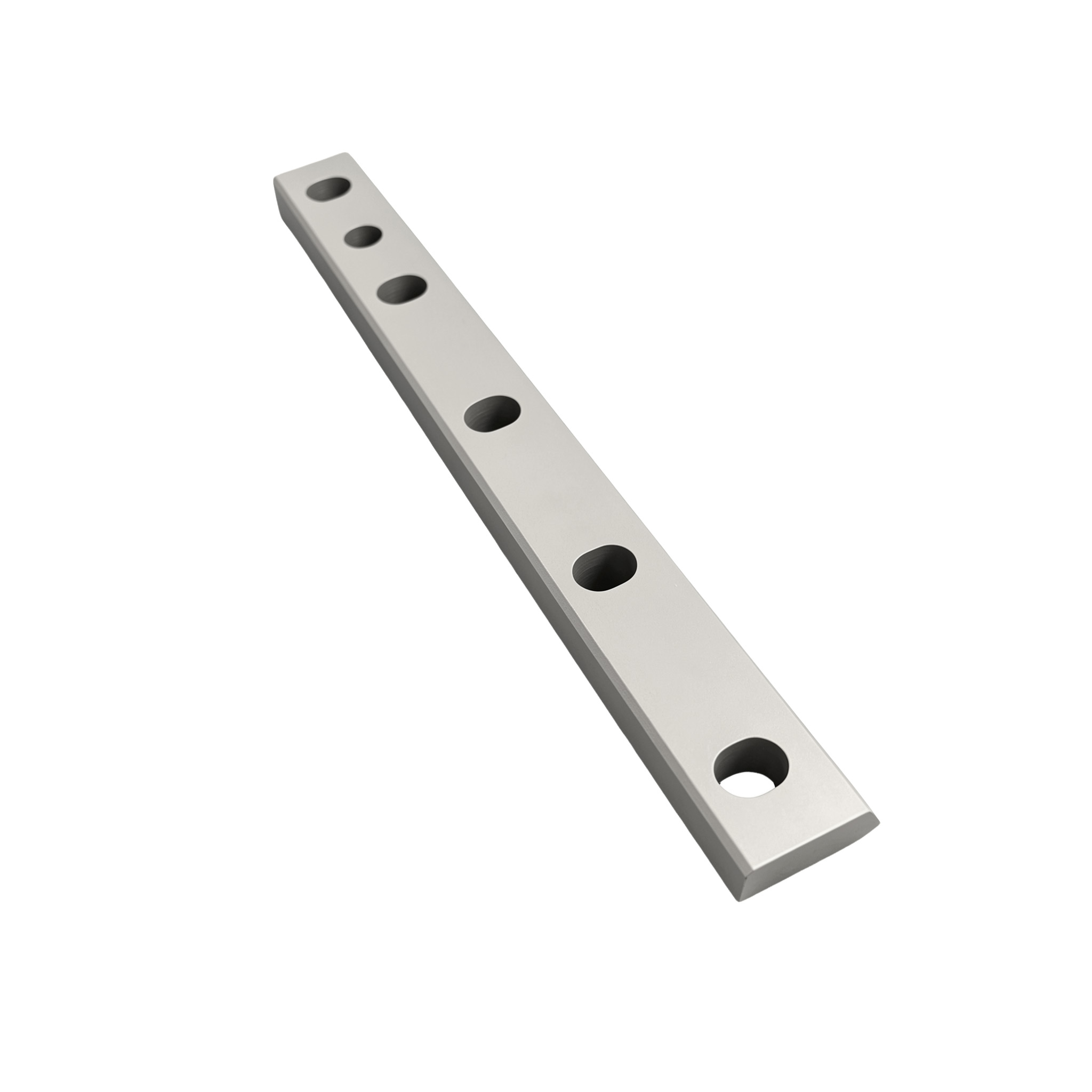
The Sacmi sliding knife plays a critical role in production. Precise OPP label severing requires exact blade geometry. High RPMs demand absolute structural rigidity from the metal. Signs of impending failure appear early if you look closely. You should measure micro-abrasions routinely. Edge dulling eventually causes catastrophic label webbing jams.
Procurement teams must evaluate specific dimensions when sourcing blades. The metal composition directly affects maintenance cycles. You must weigh upfront expenses against operational longevity.
Metallurgy: Standard High-Speed Steel (HSS) offers lower initial expenses. Tungsten Carbide provides superior longevity and holds a sharper edge longer.
Surface Treatment: Anti-friction coatings are absolutely crucial. They prevent sticky hot-melt glue buildup along the cutting edge.
Rollout lessons dictate careful calibration procedures. Best practices require checking blade clearance manually. You must do this carefully during every installation. Improper clearance causes premature chipping of the metal. A brand new knife fractures easily under excessive mounting pressure. Technicians should use feeler gauges to confirm exact spacing.
Watch out for uneven wear patterns. If one side of the blade dulls faster, your drum alignment is off. Fixing the blade without correcting the drum wastes resources. You will simply destroy the replacement part just as quickly.
Operators often hyper-focus on cutting and pressing actions. They ignore essential mechanical stabilization components entirely. The Sacmi screw bushing acts as a hidden culprit in many failures. Diagnosing it requires close observation and physical testing. You must actively identify excessive radial play.
Listen for unusual operational noise near the feed drive. Watch for inconsistent label feed timing during high-speed runs. These symptoms indicate a worn stabilizer. If the bushing fails, the entire alignment shifts. The knife and roller cannot perform properly if the foundation shakes.
Maintenance synergy makes excellent business sense for modern plants. You should group part replacements logically. Replace the bushing simultaneously with the knife or roller. This proactive strategy consolidates expensive machine downtime. You open the machine once to fix three problems.
When sourcing Sacmi labeller wear parts, prioritize strict material specs. Self-lubricating bronze works exceptionally well for these components. Advanced engineered polymers also offer exceptional high-wear resistance. They handle the intense vibrations generated by 8L machines effortlessly. Insist on material certificates to verify durability.
Procurement teams face a constant and difficult dilemma. OEM components carry long lead times and premium prices. However, unverified aftermarket components carry high operational risks. Vetting Sacmi Spare Part Compatible Parts requires a strict evaluation framework. You cannot rely on generic visual matches.
Consider these essential evaluation criteria carefully:
Traceability: Does the supplier provide full material certificates for the metals and polymers used?
Tolerance Guarantees: Are the components CNC-machined to exact OEM baselines?
Field Evidence: Request real-world case studies. Demand trial-run data demonstrating cycle-count equivalence.
You need practical shortlisting logic for new vendors. Create a comprehensive scorecard to evaluate them objectively. Grade their shipping lead times and internal QA processes. Review their return policies regarding defective tolerances. A reputable supplier always stands behind their dimensional accuracy.
As a logical next-step action, initiate a pilot program. Test new Sacmi 8L labeller spare parts on a single labeling head first. Monitor the cycle counts and scrap rates closely. Do this before standardizing any new vendor across your entire facility. This mitigates risk while proving performance validity.
Effective maintenance demands a highly predictive approach. You must shift away from reactive fixing immediately. Predictive evaluation of wear components prevents sudden line stoppages. High-quality compatible rollers offer a perfectly viable alternative. Sliding knives from trusted aftermarket suppliers perform exceptionally well in heavy-duty environments.
They provide excellent solutions when you enforce strict procurement criteria. Do not compromise on metallurgy or dimensional tolerances. Take immediate action today to secure your production lines. Audit your current spare parts inventory thoroughly. Request technical specification sheets from prospective suppliers.
Implement pilot testing for any new components you source. Train your technicians to spot micro-abrasions and radial play early. Predictive evaluation guarantees higher production uptime. A well-maintained Sacmi 8L will run seamlessly for years.
A: Lifespan depends heavily on label material thickness and machine RPM. High-speed lines processing thick OPP labels require more frequent changes. A standard cycle-count benchmark typically falls between 30 and 40 million cuts. Inspect the blade edge weekly to catch micro-abrasions early.
A: Incorrect thermal properties in aftermarket parts cause this issue. If the rubber lacks proper heat resistance, it becomes porous. Incorrect Shore hardness also leads to surface adhesion. Glue clings to these compromised surfaces rapidly, causing severe stringing.
A: Yes, precision-engineered compatibles are entirely safe. However, generic visual matches without metallurgical testing pose significant line risks. You must verify CNC-machined tolerances and request material certifications. High-quality compatibles match OEM performance safely.
A: You should perform specific diagnostic mechanical checks. Measure the radial play using a precision dial indicator. Observe the machine for feed-timing inconsistencies. If the label webs vibrate unusually during high-speed runs, the bushing likely requires immediate replacement.


